Practice-Based
Coaching (PBC) Cycles
Evidence-informed coaching to support coaches, practitioners, children, and families!
On this page, you can learn more about:
-
- How lead coaches use PBC Cycles to support other coaches
- How coaches use PBC Cycles to support practitioners
What is a PBC Cycle?
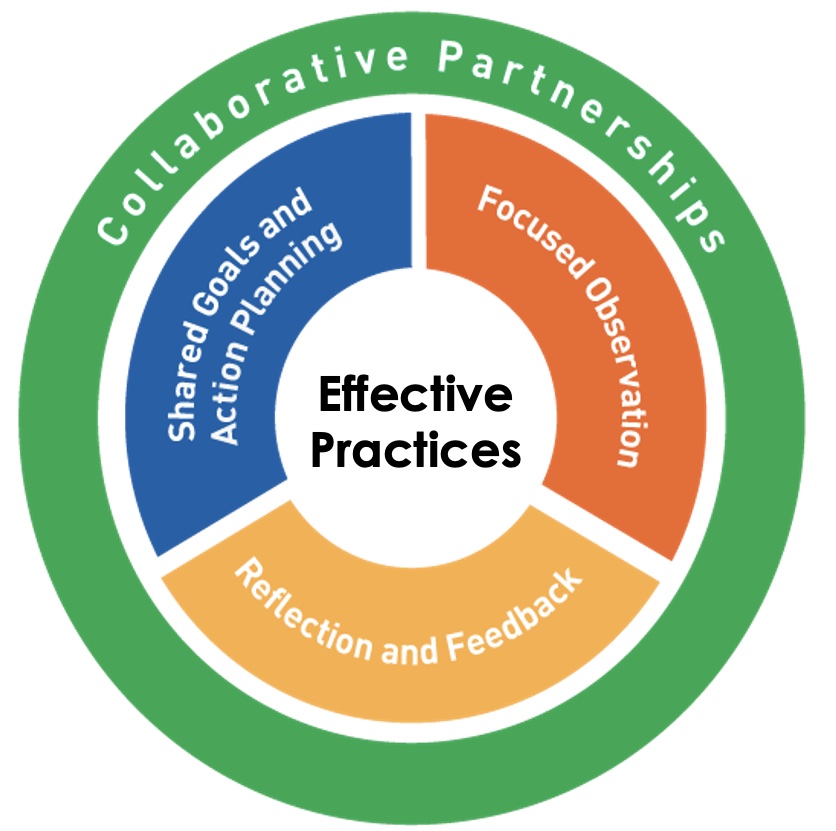
Practice-Based Coaching (PBC) is an evidence-informed approach to coaching that helps people learn about and use effective practices (Snyder et al. 2015, 2022). Effective practices are actions or behaviors that can be seen or heard and counted in the practice setting. A PBC cycle includes three parts that happen within a collaborative partnership: (1) shared goal setting and action planning, (2) focused observation, and (3) reflection and feedback.
Coachees are the recipients of PBC support.
-
- Lead coaches use PBC cycles to support coaches’ implementation of effective coaching practices.
-
- Coaches use PBC cycles to support practitioners’ implementation of effective interactional and teaching practices.
Within the PBC cycle, shared goal setting and action planning are data-informed decision-making processes in which the coach and coachee review data on effective practices and discuss strengths, needs, priorities, and preferences for PBC support. Data are collected during the focused observation to inform reflection and feedback. The PBC cycle can be implemented using various formats (e.g., individual, group, in-person, virtual, hybrid). Coaches and coachees connect on an ongoing basis using a format that meets their needs.

Why are PBC Cycles important for PBC-DIDM?
Important Sources of Effort and Effect Data are collected during PBC cycles. Often, a PBC log or checklist is used to record:
-
- how much PBC support is provided (e.g., number of meetings, length of meeting)
- how well PBC is implemented (i.e., Did the essential parts of PBC occur?)
- which PBC coaching strategies are used (e.g., modeling, graphic feedback)
- other events that might affect PBC implementation (e.g., illness, unexpected events)
Information about the effects of PBC can also be collected during PBC cycles. Coaches can use an effective practice checklist or other data collection tools to record:
-
- how much or how often effective practices are being used (e.g., number of times)
- how well effective practices are meeting the needs of the children and setting (e.g., with which children, in which activities)
Collecting PBC logs and effective practice data using an electronic system that supports data-informed decision-making is helpful for implementing PBC-DIDM and the Prepare, Look, Think, Act (PLTA) Process.
How could teams or individuals use this information?
When programs implement PBC-DIDM, systems and schedules are established to guide the implementation of PBC cycles.
PBC cycles are used in two ways:
- Lead Coaches will support other coaches to use PBC practices and coaching strategies.
- Coaches will support practitioners to use effective interactional and teaching practices with children and families.
These modules will help Leadership Teams and Lead Coaches consider key decisions when developing implementation supports and electronic data systems to record multiple Sources of Effort and Effect Data collected throughout each PBC cycle.
PBC Cycles to Support Practitioners
Use this module to learn more about how coaches use the PBC Log to (a) guide PBC cycles with practitioners and (b) support coaching effort data collection.
PBC Cycles to Support Coaches
Use this module to learn more about how lead coaches use the PBC Implementation Check Log to guide PBC cycles with other coaches and support data collection.
What PBC Cycle resources are available?
Download the PBC Log developed by the PBC-DIDM team. This form guides coaches in supporting practitioners and documenting their coaching efforts. Download the PBC Implementation Check Log developed by the PBC-DIDM team. This form guides lead coaches in supporting other coaches and documenting their efforts. When implementing PBC-DIDM, it will be essential to collect these data in an electronic system to support data-informed decision making.
Download other tools for implementing PBC cycles by visiting the Resource Library, where you can filter by role for “PBC Coach” and “PBC Lead Coach.”

What other resources are available?
If your program is just starting to implement PBC and PBC-DIDM, the foundational tier of the PBC-DIDM Implementation Profile can guide the leadership team and lead coaches through key considerations for installing PBC, while the initial tier is focused on establishing electronic systems.
Review the PBC-DIDM Effort and Effect Cascade to explore how lead coach and coach efforts are linked to outcomes and effects. Or visit the Sources of Effort and Effect Data modules to learn about how to collect PBC cycle information using an electronic system.